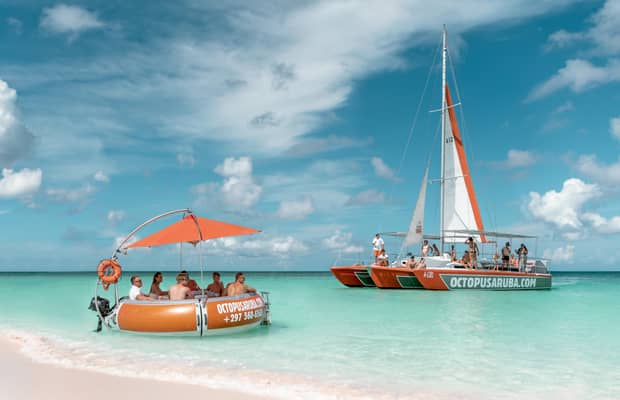
Snorkel Cruise with Open Bar & Light Lunch
Snorkelling is the trip the wind affects most. Book it in the September–November calm and you see the wreck properly; book it in March and you are swimming in chop.
Aruba holds 85–91°F (29–33°C) all year, takes 18–20 inches of rain across twelve months, and sits at about 12° north on the far southern edge of the hurricane belt. So «when should I go» is not a weather question. It is a question about what you are willing to trade — and the trade is sharper than the brochures admit: the driest, brightest months are also the windiest, busiest and most expensive, while the calmest sea and the cheapest beds arrive with the rain.
There is no bad month in Aruba, and that is the actual answer. The island sits outside the tropics' worst habits: it holds 85–91°F (29–33°C) all year, takes only 18–20 inches of rain annually, and sits at about 12° north — the far southern edge of the hurricane belt. So the question is not «when is the weather good», it is what you are willing to trade. And the trade is sharper than most guides admit: the driest, sunniest months are also the windiest, busiest and most expensive; the calmest water and cheapest beds come in the months that see the most rain.
Temperatures are averages, shown in °F with °C beneath. «Prices» is hotel pricing relative to peak, not tour pricing — tour prices barely move with season. Click any column header to sort.
| Month | Avg high | Avg low | Season | Crowds | Hotels | What it means |
|---|---|---|---|---|---|---|
| January | 85°F29°C | 76°F24°C | Peak | Busy | Peak | Dry and windy. The island is full and prices are at their highest. |
| February | 85°F29°C | 76°F24°C | Peak | Busy | Peak | Same as January, with the trade wind building. |
| March | 86°F30°C | 76°F24°C | Peak | Busy | Peak | Driest month of the year — about 0.4 in across roughly 2 days. |
| April | 88°F31°C | 77°F25°C | Peak | Busy | Peak | Joint-driest, and the last of the high season. Prices ease at the end. |
| May | 89°F32°C | 78°F26°C | Shoulder | Easier | −20–30% | Hotels drop 20–30% below peak. Still dry, still windy, far less crowded. |
| June | 90°F32°C | 79°F26°C | Shoulder | Easier | −20–30% | Hurricane season opens on the 1st, but risk here is minimal this early. |
| July | 90°F32°C | 79°F26°C | Shoulder | Mixed | Mid | The windiest stretch of the year, and choppy water with it. |
| August | 91°F33°C | 79°F26°C | Shoulder | Mixed | Mid | Hottest month at 91°F / 33°C, and the start of the Atlantic peak. |
| September | 90°F32°C | 79°F26°C | Low | Quietest | Lowest | Wind drops. Calmest water of the year, and the cheapest hotels. |
| October | 89°F32°C | 78°F26°C | Low | Quietest | Lowest | Calm water, but ~3.0 in of rain across 7–8 days. |
| November | 87°F31°C | 78°F26°C | Low | Filling | Rising | Wettest month — about 3.3 in over 10 days. Still calm at sea. |
| December | 86°F30°C | 77°F25°C | Peak | Very busy | Highest | About 3.1 in over 11 days, and the priciest fortnight of the year from mid-month. |
On the figures Temperatures, rainfall and wind are published climate averages, cross-checked against a second set before publication and re-checked each release. Where two sets disagreed we print both rather than pick the friendlier number — you will see that in the wind section below. Averages describe a typical year, not your week.
Aruba takes roughly 18–20 inches — about 450 mm — across the entire year. For comparison, that is less than London gets, on an island where it falls in short bursts rather than settling in for the day. Here is how it distributes.
About 0.4 inches across roughly two days in each month. This is as close to guaranteed sunshine as a Caribbean island gets.
January and February are barely behind, at about two rain days each.
Rain picks up gradually through the summer without ever becoming the point of the day. September is the hinge month: the rain starts arriving just as the wind drops away.
November is the wettest month at about 3.3 inches over 10 days; December about 3.1 inches over 11 days; October about 3.0 inches over 7–8 days.
Ten wet days out of thirty still means twenty dry ones — and the sea is at its calmest.
Aruba's constant trade wind is why the heat never feels like 91°F (33°C), why the divi-divi trees all lean the same way — and why the month you pick changes what a boat day is actually like.
It averages around 15–20 mph year-round, and it is the single thing that most changes a snorkel trip, a sunset sail and a beach afternoon.
Published figures disagree on exactly when the wind peaks — some put the strong stretch across February to August, others name July and August specifically. They agree on the part that decides your booking: the wind is strong for most of the year and lightest from September to November. We print the disagreement rather than averaging it into a number nobody measured.
This is the question that decides whether people book Aruba in September at all, so it deserves a straight answer rather than a reassuring one.
Aruba sits on the far southern edge of the hurricane belt, well below the corridor most Atlantic systems travel. That is why direct strikes are genuinely rare rather than merely lucky.
The Atlantic season runs 1 June to 30 November, with peak activity from August into October.
Felix passed the ABC islands on 1–2 September 2007 as it strengthened into a hurricane. On Aruba it damaged one house and briefly cut power to a northern town.
That is the concrete example we can point to — and it tells you the honest scale of the thing.
You will read «Aruba is outside the hurricane belt, zero risk». Some published guides say exactly that. Others place the island on the belt's southern edge and calls a direct hit rare.
We take the second. Rare is a very good bet; zero is not a number anyone can promise.
Tour prices on Aruba barely move with the season — unlike hotels. So the month changes the conditions you get for the same money, which is worth planning around.

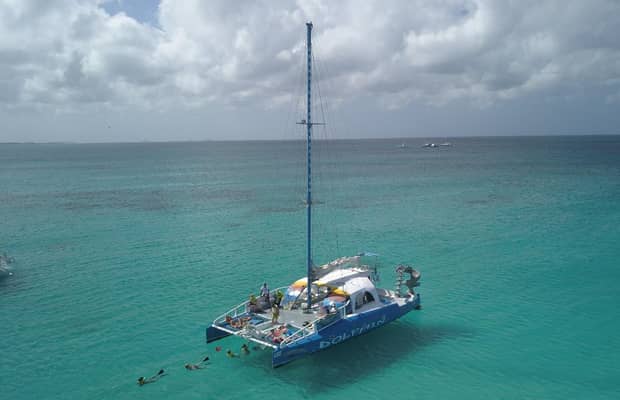
Snorkelling is the trip the wind affects most. Book it in the September–November calm and you see the wreck properly; book it in March and you are swimming in chop.

The one that works year-round: it sails, so wind is the point rather than the problem. In the windy months this is the boat that benefits.

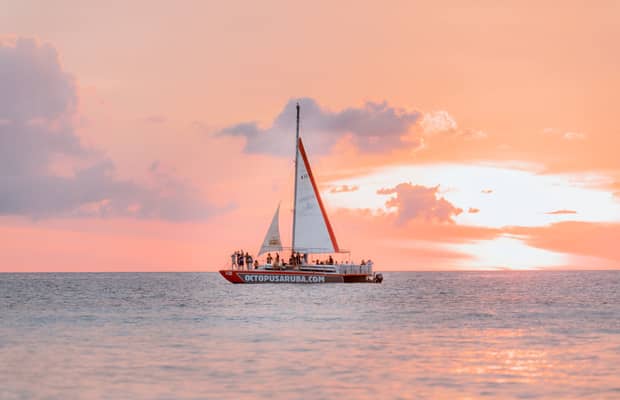
Sunset moves through the year, so check the departure time for your date rather than assuming. Nothing else about this one changes with the season.
Tour prices barely move with the season — so pick your month for the conditions, then book the tour that suits them. Everything on the island is compared across our eight category pages.